

 Available in AU
The Legal Line Around Australian Pokies
The legal position of pokies in Australia begins with a distinction that is easy to blur and important not to: the game is one thing, the person playing it is another.
Under the Interactive Gambling Act 2001, gambling providers cannot offer certain online services to people in Australia. Online casino games fall within that boundary. When pokies are supplied online to an Australian customer, they are treated as a prohibited interactive gambling service. The same classification applies to online roulette, blackjack and live dealer tables.
That is the line. It concerns the provision of the service, not a general criminal offence committed by every person who happens to place a bet.
What the law prohibits
Australia does not have a single gambling statute or one gambling authority governing every form of play. Responsibility is divided between the federal level and the states and territories. That arrangement can make the market appear more permissive than it is. A licence for one kind of gambling does not become a universal passport for another.
This index gives Australian readers a concise way to review key operator details before choosing a casino. Use the listed licence, bonus, deposit, and payout information to identify which options deserve closer attention.
License: Curacao eGaming Licence · Min. deposit: A$10 Aussie Play is listed with a Curacao eGaming Licence and a minimum deposit of A$10.
License: Curacao eGaming Licence · Min. deposit: A$10 WinSpirit is notable for its Curacao eGaming Licence and a minimum deposit of A$10.
License: Curacao eGaming OGL/2023/174/0082 (Dama N.V.) · Bonus: up to A$10,000 + 500 free spins across 4 deposits · Min. deposit: A$15 LevelUp Casino offers up to A$10,000 plus 500 free spins across four deposits. It operates under the Curacao eGaming OGL/2023/174/0082 issued to Dama N.V., with a minimum deposit of A$15.
License: Curacao Gaming Control Board (TechSolutions Group N.V.) · Bonus: 100% up to A$250 + 100 free spins (1st deposit) Bizzo Casino features a 100% bonus up to A$250 plus 100 free spins on the first deposit. Its licence is from the Curacao Gaming Control Board and is held by TechSolutions Group N.V.
License: Curacao · Bonus: up to A$10,000 multi-stage + 500 free spins · Min. deposit: A$20 (POLi) Lucky Dreams offers a multi-stage bonus of up to A$10,000 plus 500 free spins. The listed minimum deposit is A$20 when using POLi, and its licence is from Curacao.
License: Curacao OGL/2024/1335/0780 · Bonus: up to A$1,000 + 150 free spins, wager-free · Min. deposit: EUR 20 Vegaz Casino stands out with a wager-free bonus of up to A$1,000 plus 150 free spins. It operates under Curacao OGL/2024/1335/0780, with a minimum deposit of EUR 20.
License: Curacao Gaming Control Board OGL/2023/176/0095 (Hollycorn N.V.) · Bonus: 100% up to A$10,000 + 100 free spins GoldenCrown offers a 100% bonus up to A$10,000 plus 100 free spins. Its listed licence is Curacao Gaming Control Board OGL/2023/176/0095, held by Hollycorn N.V.
License: Curacao Gaming Control Board · Bonus: up to A$5,000 + 400 free spins JustCasino is featured with a bonus of up to A$5,000 plus 400 free spins. It holds a Curacao Gaming Control Board licence.
License: Curacao · Bonus: 100% up to A$500 + 200 free spins, 10x wagering · Payout speed: crypto 30-60 minutes, fiat 1-5 days · Min. deposit: A$10 Wild Tokyo offers a 100% bonus up to A$500 plus 200 free spins with 10x wagering. Crypto payouts are listed at 30–60 minutes and fiat payouts at 1–5 days, with a minimum deposit of A$10.
License: Curacao, operated by Dama N.V. · Bonus: 325% up to 5.25 BTC + 250 free spins across 4 deposits 7Bit Casino offers a 325% bonus up to 5.25 BTC plus 250 free spins across four deposits. It is licensed in Curacao and operated by Dama N.V.
Online sports betting is legal where it is offered by operators holding the relevant state or territory licences. Race wagering is also part of the licensed landscape. Online casino games are different. There is no Australian gambling licence for offering casino games online to Australian customers because providing that product is against the law.
This is why the familiar language of “licensed online pokies” becomes misleading when applied to Australia. A local operator may be licensed for a lawful wagering product, but that authorisation does not permit it to provide pokies online. There is no domestically licensed real-money online casino for Australian players.
The legal category is functional rather than decorative. It does not depend on whether a website calls its games a casino, a gaming room or an entertainment platform. If the service provides online casino play to an Australian customer, the name attached to the page cannot change the underlying position.
Why “online” matters
A pokie in a physical venue and an online pokie are not regulated in precisely the same way. Australia has a long-standing land-based gambling culture, particularly through clubs and hotels. The electronic gaming machine is familiar, almost domestic in some places: part of the furniture, part of the local economy, and occasionally part of the local argument about what a community should tolerate.
Classified as a prohibited interactive gambling service under the Interactive Gambling Act 2001.
Falls within the same prohibited category as online pokies when offered to Australians.
Subject to the same legal prohibitions as other online casino games.
Moving the same basic experience onto an internet service changes the legal question. The Interactive Gambling Act 2001 addresses the supply of interactive gambling services to people in Australia. That is why the online version cannot simply borrow the legal status of a machine in a licensed venue.
The distinction is not a technical trick. It reflects the reach of an internet product. A physical machine is tied to a premises and the rules governing that premises. An online service can be accessed across borders and at a distance, which is precisely why the federal framework treats the provider’s conduct as the central concern.
A familiar game does not produce a familiar licence.
The provider is the legal target
The Act is aimed at gambling providers that offer prohibited services to Australian customers. It does not make an Australian a criminal merely for placing a bet at an offshore site.
That distinction matters because public discussion often collapses two separate questions:
- Is the provider allowed to offer online pokies to customers in Australia?
- Is the Australian customer committing a crime by making a bet?
The answer to the first question is no. The answer to the second, under this framework, is also no: the law targets the provider rather than the player.
This is not an endorsement of offshore casinos, nor does it turn them into lawful Australian services. It simply describes where the legislation places responsibility. A person’s lack of criminal liability does not create a right to a service that the provider is prohibited from supplying.
The player is not the licensed operator. Nor is the player a regulator by accident.
Foreign operation does not create Australian permission
A website operating outside Australia may describe itself as an offshore casino and may hold a foreign licence. That foreign authorisation does not permit the service to offer online pokies to Australian customers.
The relevant question is not merely where the company is incorporated, where its servers are located or which regulator appears in its footer. The question is whether the prohibited interactive gambling service is being offered to a person in Australia. A foreign licence may regulate the operator under the law of another jurisdiction; it does not create an Australian casino licence, because no such domestic licence exists for this product.
That point is particularly important in an industry fond of badges, seals and legal-sounding labels. A logo can establish that a foreign authority has issued some form of authorisation. It cannot rewrite the Interactive Gambling Act 2001.
A foreign licence remains foreign.
Why the boundary is drawn this way
The structure of Australian gambling regulation says something about the country’s compromise with gambling. It does not attempt to erase wagering altogether. Instead, it permits particular products through particular licensing arrangements while excluding online casino services from the domestic market.

Sports and race betting have an established licensed pathway at state and territory level. Online pokies do not. Their absence is not an oversight waiting for a clever operator to correct it. It is the result of the legal framework.
That framework also avoids treating every form of gambling as interchangeable. A bet on a sporting event, a race wager and a spin on a pokie may all involve money and chance, but regulation assigns them different places. The boundary is product-specific and channel-specific.
This is why a general statement such as “gambling is legal in Australia” is too blunt to be useful. Some gambling products are lawful when supplied under the relevant licences. Online casino games offered to Australian customers are not among them.
What this means in practice
The legal status of online pokies can therefore be stated without euphemism:
- Online pokies offered to Australian customers are prohibited interactive gambling services under the Interactive Gambling Act 2001.
- Online roulette, blackjack and live dealer tables fall within the same prohibited category when offered in that way.
- No Australian gambling licence exists for online casino games.
- No domestically licensed real-money online casino exists for Australian players.
- The provider is the target of the prohibition, not the individual player placing a bet.
These points should not be softened by the existence of offshore websites. Availability is not legality. A service may be reachable without being lawfully offerable to Australian customers; the internet has never been especially disciplined about making that distinction visible.
The result is a regulatory line that is firm even when the screen makes it look porous. Australian law permits licensed wagering products, but it does not permit providers to supply online pokies as Australian casino services. The person at the keyboard and the business behind the website occupy different legal positions. Confusing them obscures the rule that matters most: the prohibited act is the offering of the online casino service to the Australian customer.
Bonuses Where the Law Leaves No Room for Offers
A bonus is never just decoration around a gambling product. It is a sales device: a way to make an account look more attractive, soften the first financial step, or keep a customer returning after the initial play. That distinction matters in Australia because the law does not create a lawful online casino market to which promotional rules could then be attached.
Prohibited Service Promotional offers like welcome bonuses or free spins do not change the legal status of prohibited online casino services.
For Australian customers, online casino games including pokies, roulette, blackjack and live dealer tables are prohibited interactive gambling services when offered online. The same boundary applies to the commercial language built around them. A welcome bonus, deposit match, free spins offer or loyalty reward does not alter the status of the underlying service. It merely makes the prohibited offer more persuasive.
There is no lawful Australian online casino licence that turns such a promotion into an authorised product. Local operators holding relevant licences may offer gambling products to Australian residents, but that principle does not extend to online casino games. The legal distinction is narrow in wording and wide in consequence.
A bonus cannot repair the product
Promotional claims often make gambling appear to be a retail transaction rather than a regulated activity. “Join today.” “Claim an offer.” “Unlock rewards.” The language is familiar because it borrows from ordinary commerce, where a discount may be an innocent reason to choose one shop over another. In online casino gambling, the offer is tied directly to a service that Australian law prohibits providers from supplying.
That is why the problem is not limited to whether a promotion contains fair terms. Clear wagering conditions, prominent disclosure or a carefully drafted expiry clause cannot create permission where the product itself cannot lawfully be offered. The issue comes before the small print.
A bonus attached to online pokies remains connected to online pokies. A reward for playing roulette remains connected to roulette. The commercial incentive follows the service into the same legal category. Dry, but decisive.
This also explains why describing a promotion as “risk-free”, “exclusive” or “for Australian players” does not make it safer or more legitimate. Such wording concerns presentation, not authorisation. It may encourage registration or deposits, but it cannot supply an Australian licence that does not exist.

The offshore distinction
Offshore casinos may publish bonus pages aimed at Australians, but an overseas location does not place those offers inside the Australian legal framework. A foreign licence may regulate the operator under the law of another jurisdiction; it does not authorise the provision of prohibited online casino services to Australian residents.
That distinction is easily blurred by the visual habits of gambling websites. A badge, licence number or compliance statement can give a promotion the appearance of official approval. Yet a foreign regulator’s approval and Australian permission are separate questions. The first may concern the operator’s status abroad. The second concerns whether the service may be offered in Australia. For online casino games, the answer to the latter is no.
Accordingly, offshore bonuses should not be presented as lawful options for Australians. Nor should foreign licensing be used as a substitute for an Australian casino licence. There is no such domestic licence for this product.
The player’s position is different from the provider’s. The Interactive Gambling Act 2001 targets the gambling provider rather than the individual player. Australians do not commit a crime merely by placing bets at offshore sites. That fact should not be twisted into an endorsement of the site, its promotions or its ability to protect funds and personal information. Absence of criminal liability for the player is not legality for the business.
- Understand that offshore licences do not grant Australian permission.
- Recognize that the law targets the provider, not the player.
- Assume a working deposit button equals legal service.
- Treat foreign regulatory badges as Australian approval.
Why the wording matters
Inducements are designed to reduce hesitation. They can turn a vague intention into an account, and an account into a deposit. In a lawful market, that commercial pressure is managed through licensing conditions and consumer protections. Where the service cannot lawfully be offered, promotional language instead becomes part of the route by which the prohibited service is presented to the public.
This is why a page about online casino bonuses must avoid treating promotional terms as if they were an ordinary shopping comparison. Listing the supposed value of an offer, praising its accessibility, or explaining how to claim it would move beyond description and into promotion. It would also risk presenting an unlicensed service as a legitimate commercial choice.
The same caution applies to softer formulations:
- “Australian-friendly bonuses” suggests that the provider may lawfully target Australian customers.
- “Licensed casino rewards” can imply that a foreign licence authorises service in Australia.
- “No-deposit offers” still promote the prohibited gambling service, even where no initial payment is required.
- “Free spins” remain an inducement connected to online pokies.
- “VIP rewards” and loyalty schemes do not change the legal character of the games involved.
A free offer is still an offer. A loyalty label is still a commercial incentive. The vocabulary changes; the legal boundary does not.
What responsible explanation looks like
A responsible account of bonuses should therefore explain the absence of a lawful offer rather than reproduce the sales pitch. It can distinguish the provider’s conduct from the player’s legal position, state that offshore promotions are not authorised for Australian customers, and avoid instructions that would help a person register, deposit or claim a reward.
It should also resist the convenient fiction that legal risk disappears beneath a foreign website address. Australian gambling regulation is concerned with services offered to people in Australia, not merely with where a company keeps its servers or incorporates its business. An overseas promotion aimed at Australian customers remains an attempt to commercialise a prohibited online casino service in this market.
That does not make every sentence about bonuses unlawful. Context matters. Explaining why a bonus cannot legitimise online pokies is different from publishing a code, linking to a sign-up page or ranking offers. The first describes the regulatory position. The second helps sell the service.
The line is not mysterious. It is the difference between analysing an inducement and delivering it.
The commercial boundary
Australian law leaves room for licensed gambling products, but not for a domestically licensed real-money online casino. As a result, there is no legitimate local bonus market for online pokies, roulette, blackjack or live dealer tables. The familiar machinery of welcome rewards and retention offers has nowhere lawful to attach.
That may seem like an unusually blunt outcome in a culture where gambling advertising has long borrowed the language of sport, membership and entertainment. But the bluntness has a logic. A promotion is not neutral when it is built to draw customers toward a prohibited service. It is the front window of the business.

For Australian audiences, the accurate message is therefore simple: online casino bonuses are not lawful Australian offers, and offshore promotions should not be treated as licensed or approved options. The player is not criminalised merely for placing a bet, but the provider remains on the wrong side of the regulatory line when it offers the prohibited service.
Payments and the Cost of an Unlicensed Shortcut
Payment access can make an offshore gambling service look more established than it is. A deposit button appears, a transaction clears, and the ordinary machinery of commerce gives the arrangement a reassuring shape. Yet a successful payment says very little about whether the underlying service may lawfully be offered in Australia. Money can move across borders more easily than regulation can follow.
That distinction matters because Australia does not have one overarching gambling statute or a single gambling authority. Responsibility is divided between the federal level and the states and territories. The result is a legal landscape in which the product, the operator and the payment channel must be considered separately. A payment method is not a licence. A functioning cashier is not regulatory approval.
The lawful part of the online market
Online sports betting is legal where it is offered by operators holding the relevant state or territory licences. Race wagering is also part of the licensed market, subject to the applicable jurisdictional framework. These services exist inside a system of authorisation and oversight rather than merely appearing on a website and accepting deposits.
That system is not administered by the payment page. The Northern Territory Racing Commission acts as the de facto regulator for national online bookmakers, while state and territory authorities retain their own responsibilities. ACMA monitors compliance with and enforces Australia’s interactive gambling laws. Its role is not to certify every payment method attached to a gambling website; it is to enforce the boundaries of the interactive gambling regime.
This is why a lawful wagering service and an offshore casino cannot be treated as equivalent simply because both accept electronic payments. One belongs to a licensed category. The other may be offering a prohibited interactive gambling service to an Australian customer. The transaction is incidental to that legal difference.
Enforcement ACMA has directed ISPs to block thousands of illegal gambling and affiliate websites to enforce the Interactive Gambling Act.
Why a working deposit does not settle the question
Offshore casinos commonly operate under licences issued outside Australia, including in Malta or Curaçao. Such a licence may be recorded in a foreign register and may govern the operator in the jurisdiction that issued it. It does not authorise the operator to provide online casino games to Australians.
The same principle applies to the payment infrastructure. A bank transfer, e-wallet or other available channel can indicate that a processor is willing to handle a transaction. It cannot transform prohibited online casino activity into licensed Australian wagering. Financial access is evidence of access, not evidence of legality.
That may sound almost painfully obvious. Online commerce has spent years teaching the opposite lesson: if a button works, the service must be real; if the receipt arrives, the arrangement must be respectable. Gambling regulation declines to join this philosophy.
The legal question is not merely whether funds can be deposited or withdrawn. It is whether the provider is permitted to offer the relevant gambling product to a person in Australia. For online casino activity, no domestically licensed real-money online casino exists for Australian players. The absence is not a temporary gap in a directory. It follows from the prohibition on offering that product.
Payment restrictions are part of the wider response
Australian gambling reform has also narrowed the payment environment around online gambling. Credit cards and cryptocurrency are banned as deposit methods for Australian online gambling, and credit-funded payment methods are not a lawful shortcut around that restriction. This does not mean that every remaining payment route is an endorsement of the service using it.
The distinction is important because payment availability can create a false hierarchy of trust. A card payment may fail while another method succeeds; a withdrawal may be processed while a complaint remains unresolved; a site may continue accepting deposits after enforcement attention has begun. None of these events answers the regulatory question.

For a lawful licensed wagering provider, payment arrangements sit within a broader compliance structure. For an unlicensed or prohibited service, the same practical convenience can increase exposure to loss. Funds may be difficult to recover, account access may disappear, and the customer may have no Australian licensing framework to appeal to. The central risk is not simply that a transaction costs money. It is that the transaction may place money beyond the protections associated with the lawful domestic market.
Enforcement changes the price of convenience
ACMA can direct internet service providers to block websites operating in breach of the Interactive Gambling Act 2001. The enforcement record gives that power a practical, rather than ceremonial, character. One set of figures states that ACMA had blocked 1,296 illegal sites and affiliates since 2019 as of August 2025. Another states that, as of March 2026, it had directed ISPs to block 1,564 illegal gambling and affiliate websites. These figures come from different reporting points and should not be silently treated as one identical total; the discrepancy itself reflects changing enforcement counts and dates.
More than 220 gambling services have also been reported as withdrawing from the Australian market following ACMA action. The wording varies between accounts—some refer to illegal gambling services, others to online gambling services—but the market consequence is the same: access can disappear. A payment route that worked yesterday may lead nowhere once a service withdraws or a domain is blocked.
This is the cost of the unlicensed shortcut. It is not limited to a possible blocked website. It includes uncertainty over withdrawals, the fragility of customer support, and the absence of an Australian casino licence behind the product. Convenience becomes conditional. The customer carries the practical consequences of a regulatory position made elsewhere.
A growing market, a deliberate boundary
Online gambling is the fastest-growing gambling segment, which helps explain the pressure placed on payment systems, advertising channels and enforcement agencies. In 2022, 11% of Australians had gambled online in the previous six months, up from 8% in 2020. Growth makes payment access more consequential: more transactions mean more opportunities for a prohibited service to present itself as ordinary commerce.
Market Reality
- Online casino games are prohibited interactive gambling services in Australia.
- No domestic licence exists for providing online pokies or casino games.
- The law targets the service provider rather than the individual player.
- Payment accessibility is not a substitute for legal authorisation.
At the same time, reports indicate that the amount Australians lost on gambling services based outside the country has reduced since the reforms. The available figures for the wider gambling market are not uniform. Australia reported approximately $32 billion in gambling losses during 2022–2023, while another account places losses on legal forms of gambling at approximately $25 billion a year. These are not interchangeable measures, so neither should be used to manufacture a false single total.
The broader picture is less tidy and more revealing. Regulation does not erase gambling, and payment controls do not turn every transaction into a harmless one. They draw a boundary around which forms of gambling may be supplied, by whom, and under what supervision. Payments reveal whether money can travel. They do not decide whether the destination is lawful.
That is the part often hidden by the bright simplicity of a cashier page. A deposit may be technically possible. The legal route is another matter.
Casino Games Australia Cannot Legally Offer Online
Australia draws a firm line between wagering products that may be licensed and casino games that may not be supplied online to Australian customers. The distinction is not about whether a game looks sophisticated, whether its software is hosted overseas, or whether a website displays a foreign licence. It is about the product being offered and the customer being served.
Online sports betting is legal when supplied under the relevant state or territory licensing arrangements. Online casino games are treated differently. Under the Interactive Gambling Act 2001, games such as pokies, roulette, blackjack and live dealer tables are prohibited interactive gambling services when offered to an Australian customer.
That makes the product category decisive. A polished interface does not change it. Nor does a foreign address.
Pokies: the familiar machine in a prohibited online form
“Pokies” is the Australian term for electronic gaming machines. In physical venues, the machines are associated with clubs, hotels and casinos, and their regulation belongs largely to the state and territory gambling systems governing those venues. Online, the legal position is different.
Real-money online pokies are among the casino games that cannot lawfully be offered to Australian customers. The fact that the game is recognisable from a land-based venue does not create an online entitlement. A digital reel, a virtual payline and a browser-based account remain part of a prohibited online casino service when supplied into Australia.
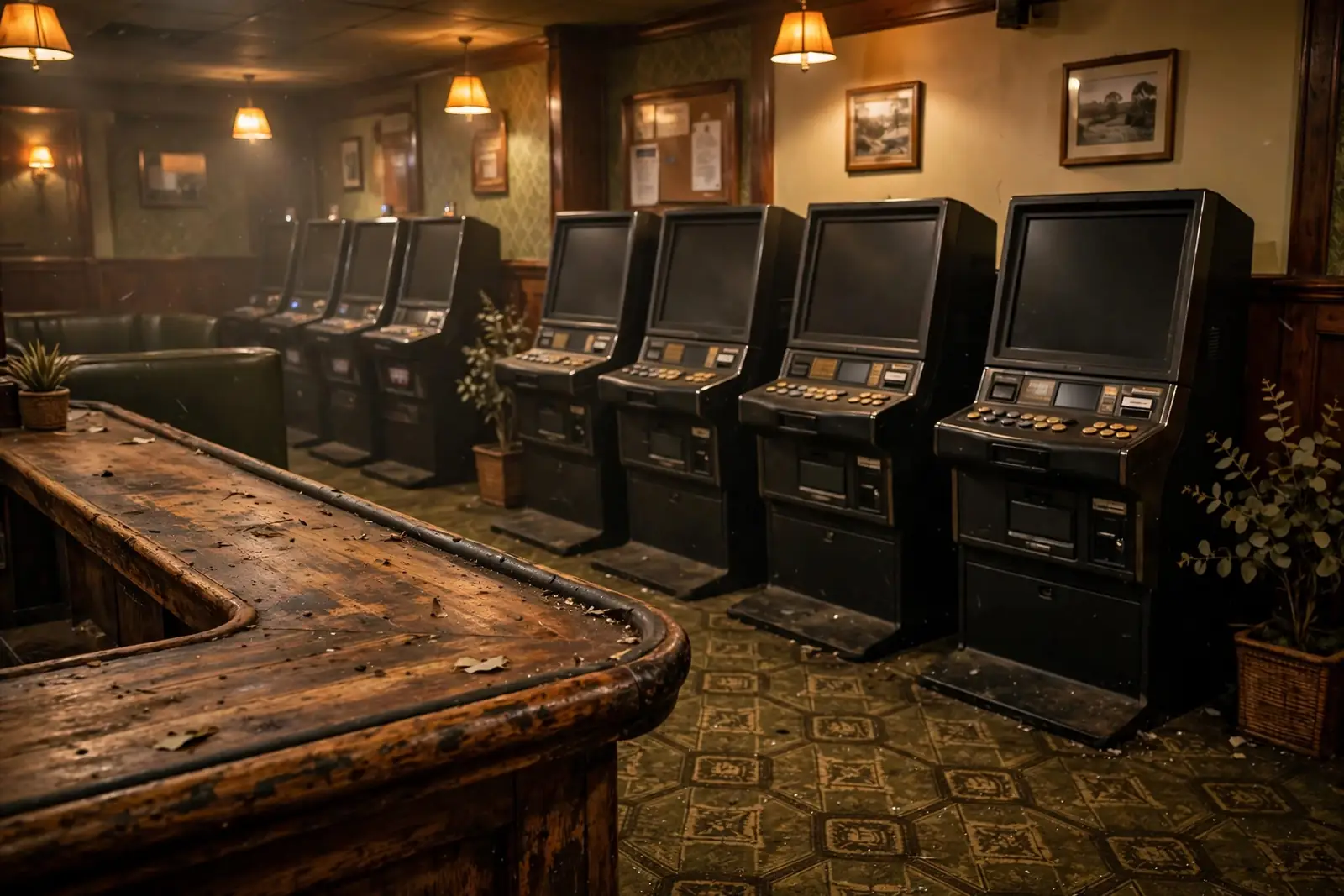
This distinction matters because the word “pokies” can make the product sound local and ordinary. The setting changes its legal character. A machine in a regulated physical venue and a real-money online pokies service are not interchangeable products merely because both display spinning reels.
There is no Australian gambling licence for online casino games. Consequently, there is no domestic licence under which an operator can lawfully provide real-money online pokies to Australian players. The missing licence is not an administrative inconvenience waiting to be solved by better registration. It reflects the prohibition itself.
Roulette: chance does not become lawful through a digital table
Online roulette falls within the same boundary. Whether the game uses a graphical wheel, a live camera feed or an automated result, it remains an online casino game when real money is wagered by an Australian customer.
The familiar forms make little legal difference. European-style layouts, live presenters and computer-generated wheels may produce different experiences, but they do not create separate Australian licensing categories. The important question is not whether the wheel is physical or simulated. It is whether an online casino service is being supplied to an Australian customer.
This is one reason foreign presentation can be misleading. A website may show a serious-looking table, publish rules in clear language and identify a regulator in another jurisdiction. Those features may describe the operator’s position elsewhere. They do not amount to an Australian authorisation to offer roulette online.
The table may be virtual. The boundary is not.
Blackjack: a recognised game with no domestic online licence
Blackjack is also named among the online casino games treated as prohibited interactive gambling services when offered to Australian customers. Its presence in a website’s game lobby does not turn it into a permitted wagering product.
The difference between blackjack and legal online sports betting is not a matter of cultural familiarity. Both involve money, probability and an operator taking bets. The law separates them by product type. Sports betting may be licensed at state and territory level; online blackjack cannot be offered under an Australian gambling licence because no such casino licence exists.
Product Categories While online sports betting and race wagering are licensed through specific state or territory frameworks, online casino products like pokies, roulette, and blackjack are excluded from the domestic market.
That distinction can appear oddly specific until the wider structure is considered. Australia has not created a domestic online casino market and then asked operators to meet a set of entry conditions. It has excluded online casino games from lawful supply to Australian customers. Regulation here functions as a closed gate, not a queue.
For the player, this also means that claims such as “Australian licensed blackjack” or “approved online blackjack” should be treated as legally incoherent in the domestic context. There is no Australian gambling licence authorising that product for Australian customers.
Live dealer tables are not an exception
Live dealer tables often appear more like a physical casino than other online products. A real person deals cards or spins a wheel while a video stream carries the action to the customer. The theatre is live; the legal category remains online casino gambling.
Live dealer blackjack, roulette and comparable table games are covered by the same prohibition when supplied to an Australian customer. Human dealers, studio equipment and real-time interaction do not create a separate permission. They change the presentation, not the status of the service.
This point has practical importance because live products are frequently described as though they occupy a middle ground between online and land-based gambling. They do not. A live feed delivered through an online service is still an online service. The dealer’s physical location does not transfer the legal supply into Australia, nor does it give the operator a domestic casino licence.
The screen may show a table in another country. The customer remains in Australia.
What the product list has in common
Pokies, roulette, blackjack and live dealer tables differ in mechanics, pace and atmosphere. Legally, the relevant common feature is that they are online casino games offered for real-money play to an Australian customer.
That category also explains why changing the label does not solve the problem. Calling a service a gaming platform, entertainment room or international casino does not alter the underlying product. If the service accepts real-money play on prohibited casino games from Australian customers, its branding cannot supply the missing licence.

Nor does a free-play appearance automatically settle the question. The key facts provided here concern real-money online casinos and the prohibition on supplying casino games to Australian customers. A decorative game lobby, a demonstration mode and a wagering service are not the same thing, but promotional language should not be allowed to blur them. The commercial purpose of a site is found in what it offers, not merely in the adjectives placed above its games.
Why no domestic online casino sits beside licensed wagering
Australia’s legal market can therefore look uneven. Online sports betting has a licensing path at state and territory level, while online casino games do not. The result is not an incomplete directory of local casinos. No domestically licensed real-money online casino exists for Australian players.
That absence is structural. No Australian gambling licence exists for casino games because offering that product to Australians is against the law. A company cannot become lawful merely by incorporating locally, placing customer support in Australia or describing its platform as a casino-style entertainment service.
This is also why casino games should not be discussed as though they were simply another class of licensed wagering. The surrounding vocabulary may overlap—accounts, deposits, bets and payouts—but the regulatory treatment does not. Sports and race wagering belong to a licensed field. Online pokies, roulette, blackjack and live dealer tables do not.
A foreign licence does not fill the gap. Offshore casinos may operate under rules in another jurisdiction, but that licence does not authorise the operator to serve Australian customers with prohibited online casino games. It verifies, at most, a foreign regulatory relationship. It does not create an Australian right to supply the product.
The list is short because the rule is broad: the issue is not which online casino game might qualify for a local licence. None does.
Legal Status Prohibited interactive gambling service
Primary Regulation Interactive Gambling Act 2001
Regulator ACMA (Federal)
Australian Casinos, Licences and the Regulators Behind Them
Australia does not have one gambling statute, one gambling authority or one neat national licence that settles every question. Responsibility is divided between the Commonwealth, the states and the territories. The arrangement reflects the country’s constitutional habits: gambling is treated as a local industry until the internet makes its customers national, at which point federal law enters the room.
That division matters for casinos. State and territory authorities supervise gambling within their respective jurisdictions, while the federal framework governs important aspects of interactive gambling offered to Australians. The result is not a hidden Australian casino register waiting to be discovered. No domestically licensed real-money online casino exists for Australian players, because Australian law does not permit casino games to be offered online to them.
A licence is therefore not a decorative badge. It identifies what an operator is authorised to provide, where it may provide it and which authority is responsible for oversight. A foreign licence may answer one of those questions without answering the Australian one.
Who regulates what
The Australian Communications and Media Authority, known as ACMA, monitors compliance with and enforces Australia’s interactive gambling laws. Its role is federal and internet-focused. ACMA can investigate services operating in breach of the Interactive Gambling Act 2001 and take enforcement action, including directing internet service providers to block unlawful gambling websites.
That does not make ACMA a casino licensing body. ACMA does not issue an Australian online casino licence, approve offshore casinos or turn a foreign authorisation into permission to serve Australian customers. Its enforcement role is precisely why those distinctions matter.
State and territory regulators remain relevant because gambling licences are generally created and administered within particular jurisdictions. Their responsibilities can cover land-based casinos, wagering, racing, lotteries and other gambling activities, depending on the local framework. The boundaries are administrative, but the consequences are practical: a licence connected with sports wagering cannot be stretched into authority for online roulette, blackjack or pokies.
The Northern Territory Racing Commission occupies a particularly visible position in national online wagering. It acts as the de facto regulator for national online bookmakers. That description belongs to bookmakers and wagering, not to online casinos. A commission supervising a lawful wagering product does not create a route around the prohibition on online casino games.

The distinction is easy to lose in a market where websites place every gambling product under one roof. The law is less interested in the website’s menu than in the product being supplied and the authority behind it.
The register that exists
ACMA publishes a register of Australian-licensed interactive wagering service providers. This is a useful register for the services it covers: interactive wagering, including lawful forms of online sports and race betting. It is not a national catalogue of online casinos.
That negative space is important. Searching the wagering register and finding a bookmaker does not establish that the same business may provide casino games. A company can hold a relevant wagering licence while lacking, and being unable to obtain, an Australian licence for online casino products. One licence cannot lend its authority to another activity merely because both appear on the same website.
Australia’s regulatory structure also means that a person may encounter state or territory registers relating to particular gambling products without finding a single public directory of all gambling businesses. There is no overarching national gambling authority that issues one universal Australian gambling licence. The register must therefore be read according to its purpose, jurisdiction and product category.
The sensible question is not simply whether a business appears somewhere official. It is whether the named licence covers the service being offered to Australians. For online casino games, the answer is not supplied by the Australian wagering register.
Foreign registers and offshore casinos
Offshore operators commonly hold licences from Malta or Curacao rather than an Australian casino licence. The Malta Gaming Authority and Curacao licensing authorities maintain public registers where a licence number and its status can be checked. This can help establish whether a foreign regulator has issued an authorisation and whether that authorisation appears current.
It cannot establish that the operator is legally entitled to serve Australian customers.
That distinction is the line between verification and permission. A foreign register verifies a relationship with a foreign regulator. It does not displace the Interactive Gambling Act 2001, create an Australian right to provide prohibited interactive gambling services or convert an offshore casino into a locally licensed casino.
Interactive Gambling Act 2001 Federal legislation that prohibits the supply of certain online gambling services, such as online casinos, to people in Australia.
The same caution applies when an operator displays a seal, licence number or regulator’s name on its own website. The number should be cross-referenced against the regulator’s official register, not accepted as evidence because it is printed neatly beside a logo. A matching entry may still describe a foreign authorisation whose geographic reach does not include Australia.
A licence can be genuine and still be irrelevant to the Australian market. Dry fact. Expensive distinction.
What a licence check can—and cannot—show
A proper licence check has two separate stages.
First, the licence number can be checked against the issuing regulator’s official website. This may confirm the holder, status and regulatory jurisdiction of the licence. For a Malta or Curacao authorisation, the relevant foreign register is the starting point. For lawful Australian wagering, ACMA’s register of Australian-licensed interactive wagering service providers is relevant.
Second, the scope of that licence must be compared with the product being offered and the customer market. A wagering authorisation is not a casino authorisation. A foreign casino licence is not an Australian casino authorisation. A registration entry is not a general exemption from Australian law.
This is why the phrase “licensed casino” requires precision. It may mean licensed somewhere. It does not necessarily mean licensed to provide online casino games in Australia. Under the Australian framework, no Australian gambling licence exists for casino games because offering that product to Australians is against the law.

The absence of a local casino licence is not an administrative gap waiting for a clever operator to fill. It is the legal position.
Oversight without a domestic online casino
Federal enforcement and state or territory licensing are not competing versions of the same system. They operate at different levels. States and territories administer gambling products that their laws permit and license. ACMA enforces the federal interactive gambling rules that restrict prohibited online services.
This explains why an Australian player may see a regulated sports bookmaker but no domestically licensed real-money online casino. The former belongs to a permitted and licensed category. The latter does not. The existence of regulation around one product says nothing about the legality of another.
It also explains why a foreign register should be treated as information rather than an invitation. Checking a licence can reveal who regulates an offshore operator and whether the licence appears valid in that foreign system. It cannot supply the Australian approval that does not exist.
The Australian casino landscape is therefore best understood through three separate questions: which authority issued the licence, what product does it cover, and whether Australian law permits that product to be offered to Australian customers. Only when all three answers align can a licence be treated as relevant to the service in question. For online casinos, the final answer remains decisive: no local licence exists, and foreign registration does not change that.
Prepared by the Betting Top 10 Australia editorial staff.